
Our Aims
�� Our Curriculum: Rooted in Care, Rising with Purpose
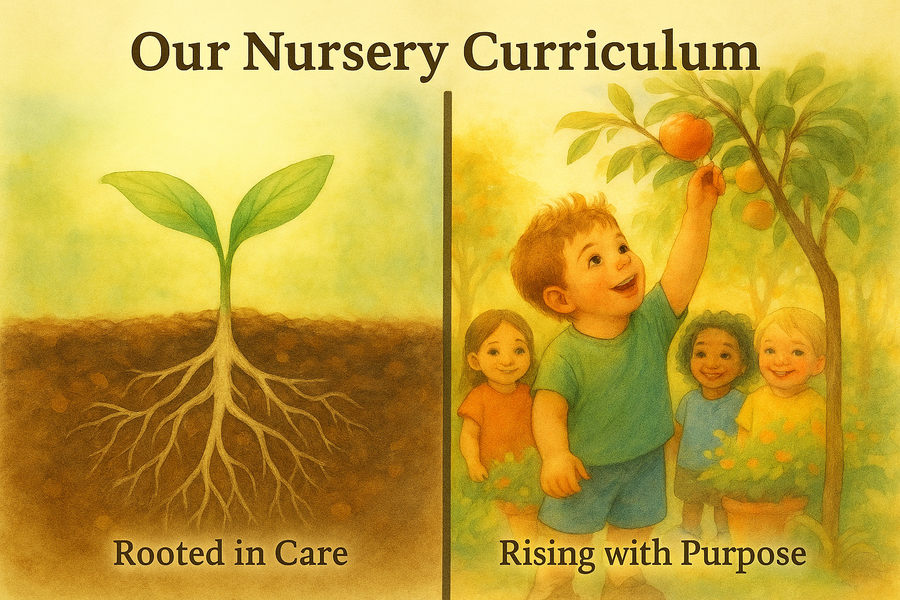 At Park View Primary School Nursery, every moment is a learning opportunity. Our curriculum is carefully designed to nurture the whole child, providing roots for their curiosity, confidence and sense of belonging through play, exploration and meaningful relationships, so that every child can flourish. We know that children’s learning deepens as these roots strengthen. That’s why our curriculum is designed to begin with care - building trust, belonging and emotional security and grows over time through exploration, play and connection.
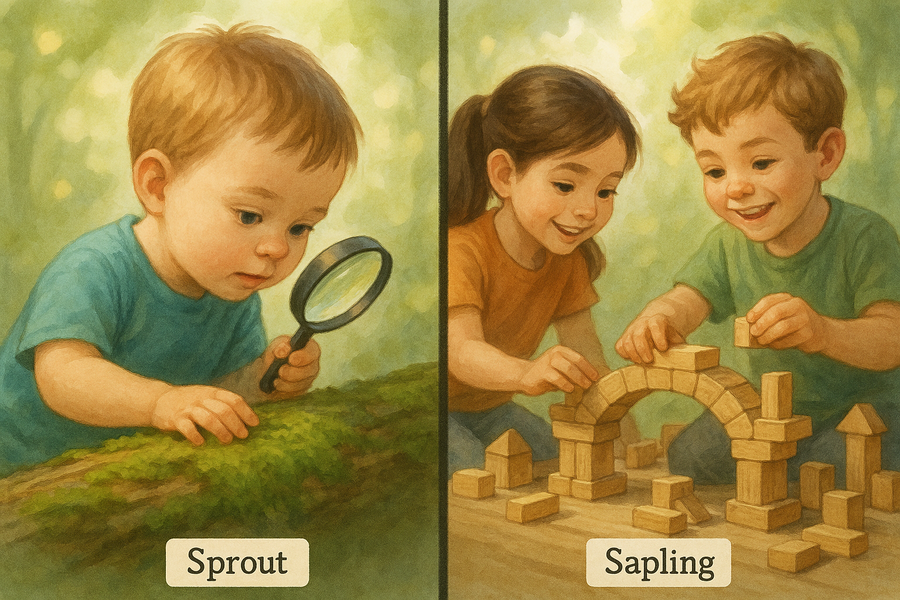 Our youngest learners, the Sprouts (2–3s), begin their journey by discovering the world around them through their senses, relationships and explorative play. They are encouraged to wonder, to question and to take their first independent steps in learning. As they grow into our Saplings (3–4s), those early experiences deepen and expand. Children build stronger skills in communication, independence and problem-solving - developing the confidence to share ideas, collaborate and express themselves creatively. We follow the principles of the Early Years Foundation Stage (EYFS), weaving all seven areas of learning into a rich, play-based curriculum that values each child as a unique learner.
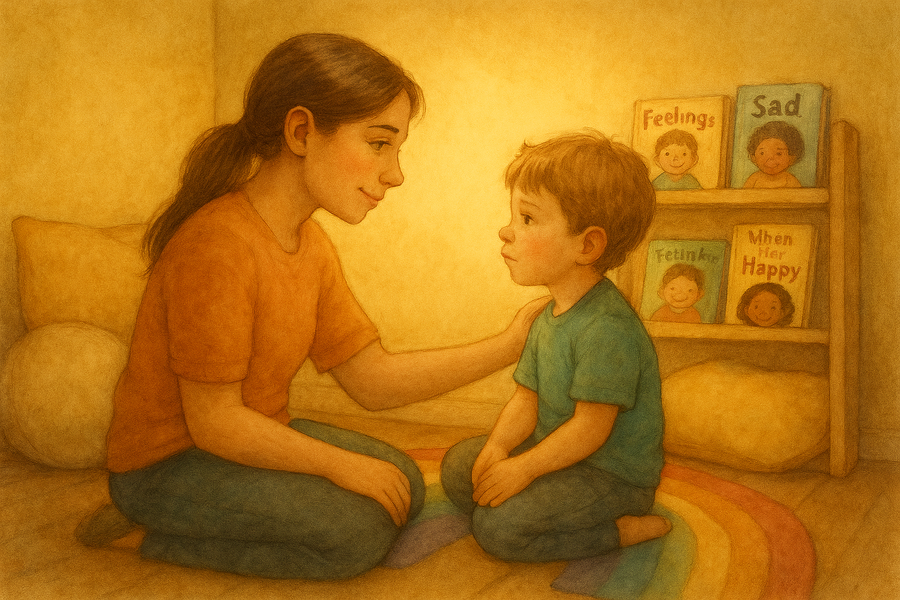
We know that children grow and learn best when they feel secure, understood and inspired. That’s why our experienced staff meet children where they are, recognising each child’s individual starting points and celebrating their unique pace of progress.
“Every child is unique, constantly learning and can be resilient, capable, confident and self-assured.” – EYFS 2021
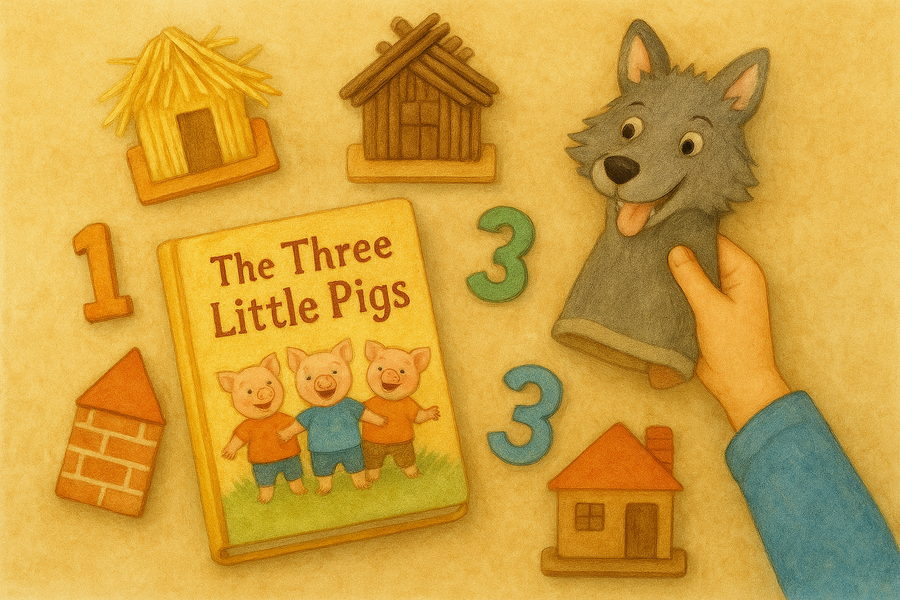 Learning isn’t a one-time event - it’s a gentle cycle. We revisit skills and concepts across the year, each time deepening understanding, strengthening confidence and extending ability. A child who once explored shapes in autumn with blocks might use that knowledge to design a house when learning about the Three Little Pigs later in the year; the counting games played indoors may evolve into problem-solving challenges outdoors. Every experience connects and grows - rooted in what children already know and love.
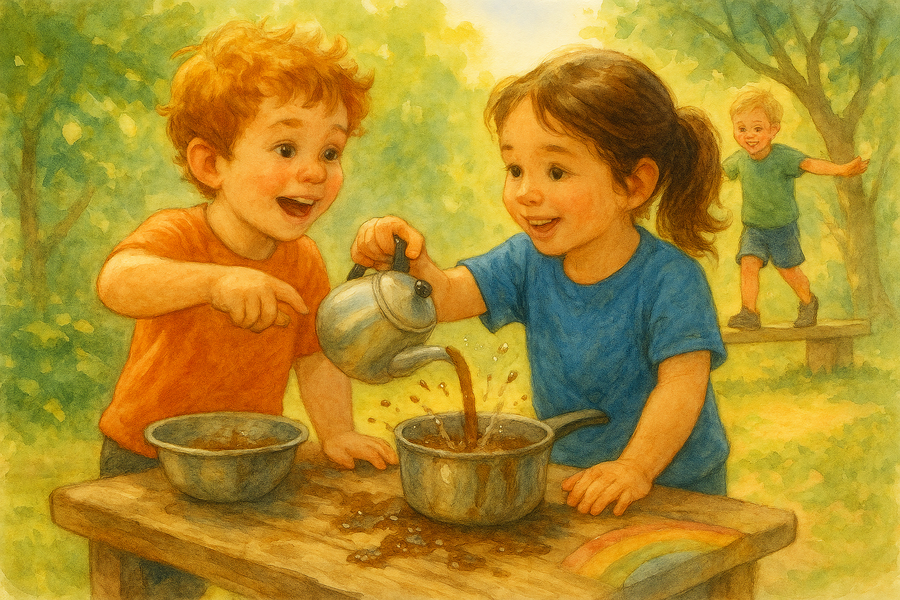
�� Through carefully planned yet flexible experiences, we ensure that every child moves forward with curiosity, joy and a lifelong love of learning.
From tiny Sprouts to confident Saplings, our children are rooted in care and rise with purpose.
PSED is at the heart of everything we do. It helps children grow into confident, kind and resilient individuals who can express their feelings, build friendships and care for themselves and others. Our staff nurture every child’s sense of belonging, encouraging independence and emotional wellbeing in a calm, positive environment.
“Warm, trusting relationships are the foundations for children’s happiness and learning.”
– Dr. Sue Allingham, Early Years Consultant
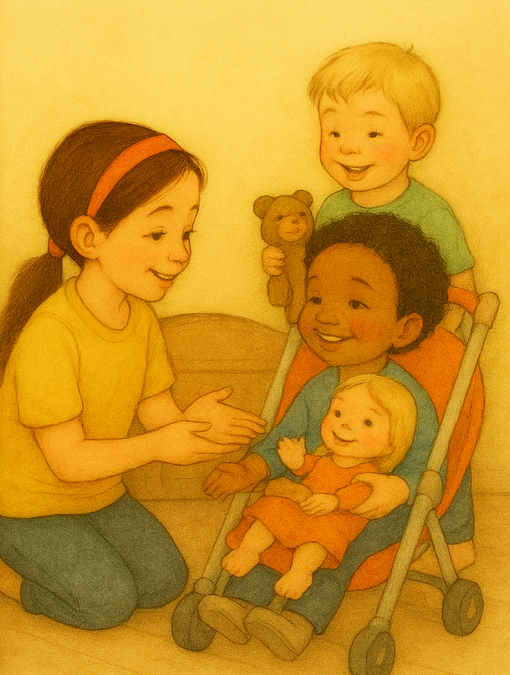
�� If you visited our nursery, you might see…
Children comforting a friend, taking turns, or helping to tidy up together. You might see staff helping a child name their feelings - “You’re feeling frustrated because you wanted that toy. What could we do to share it?”
‘Building Relationships’ aims:
Listen and attend to the contributions of others
Make themselves understood
Understand the language of others for interactions
Ask questions of others for interactions
Respect and celebrate the similarities and differences between themselves and others
Have the skills to manage negotiation and conflict
Have the skills to collaborate
Understand a range of feelings, what causes them and what can be done to help in themselves or others
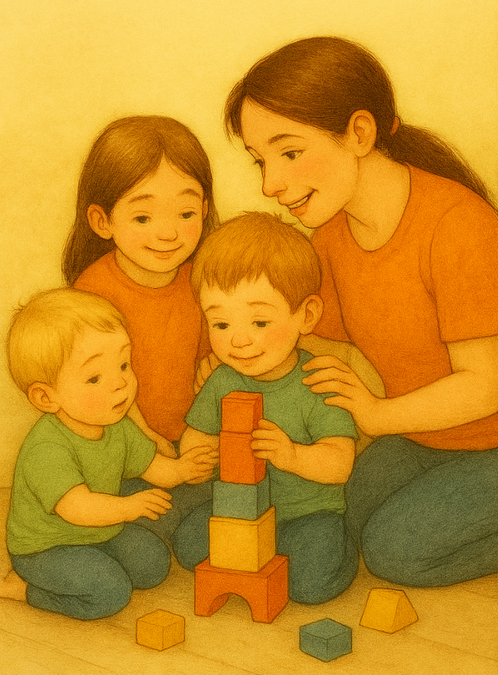
What this looks like for children in our care:
�� You might see children working together to build a tower or role-playing as a family, negotiating roles and solving small problems with support from staff. Children learn empathy, respect and cooperation through real, joyful interactions.
‘Managing Self’ aims:
Have resilience and perseverance
Adopt a sense of belonging
Have independence
Have confidence and self-esteem
Be able to select and choose their own play
Understand the rules and structure of the day
Be able to manage their own basic needs
Speak about their own feelings and emotions
Manage their own risk level
Know that mistakes are ok
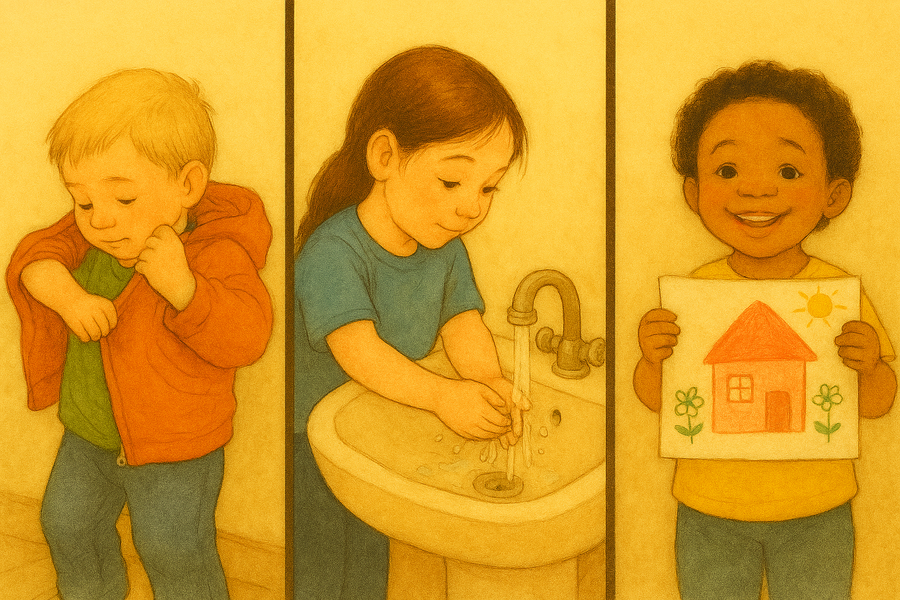
What this looks like for children in our care:
�� You might see children putting on their own coats, washing their hands before snack, or proudly showing their artwork. Staff celebrate small successes, building confidence and a “can-do” attitude.
‘Self-Regulation’ aims:
Understand different emotions in themselves and others
Have strategies to moderate emotions
Be able to communicate their emotions
Have awareness of the impact they are having on others
Have tolerance and patience
Maintain the appropriate level of focus as required
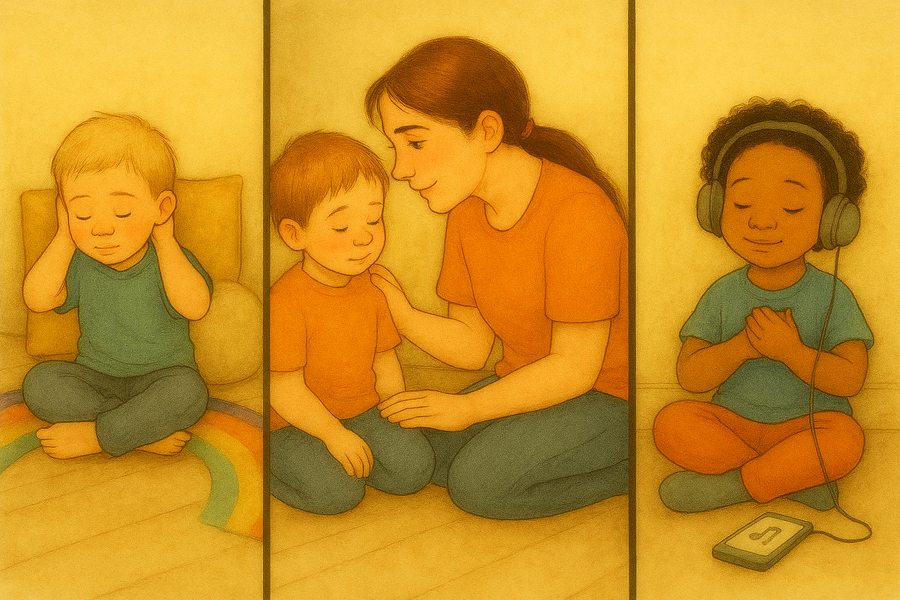 What this looks like for children in our care:
�� Children might take a moment in a quiet space to calm down, talk about how they feel, or listen to soothing music. Staff help them understand that all feelings are normal and that they can learn to manage them safely and kindly.
“Children who can name and manage their emotions are better able to engage, learn and thrive.”
– The Anna Freud Centre
At our nursery, we know that children’s language development is at the heart of all learning. Every giggle, question and chat helps build the foundations for thinking, reading and relationships. We create a language-rich environment where talking, listening and sharing ideas are part of every moment - from story time to snack time!
“The more we talk with children, the more they have to say.”
– Department for Education, EYFS 2021
 If you visited our nursery, you might see…
- A place buzzing with talk, laughter and stories - where every child’s voice is heard and valued. We listen closely, respond warmly and help children grow into confident communicators who are ready to share their ideas with the world.
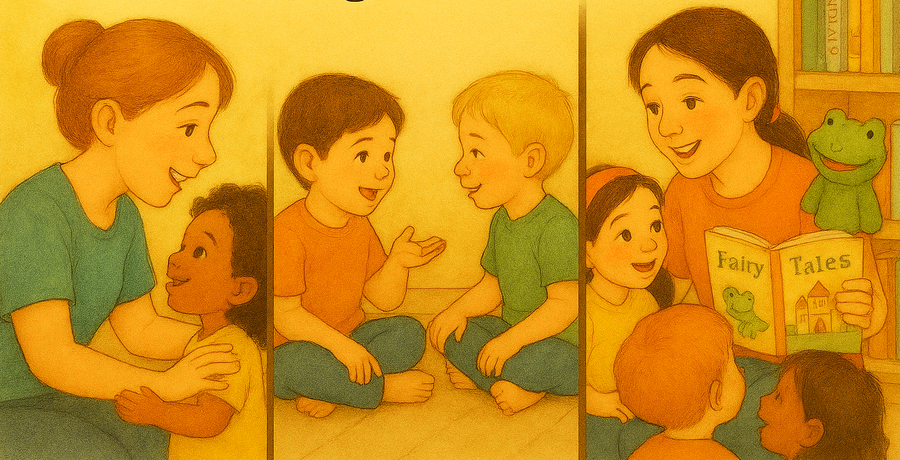
- Children deep in conversation with friends, explaining how they built a tower or describing the “squelchy mud” in the garden. You might hear staff gently extending their speech - “Yes, it’s squelchy! It’s thick and sticky too, isn’t it?” - helping children grow confident with new words. Story times are full of wonder - rhymes, puppets and books that spark imagination and invite children to join in, predict and retell.
“Children learn language best in meaningful conversations with adults who listen, respond and model rich vocabulary.”
– The Communication Trust
�� 'Attention & Listening' aims:
Show focused listening
Listen and attend to the contributions of others
Respect others’ ideas
Understand how to listen carefully and why listening is important
Engage in story and shared times
Participate and take turns in group and one-to-one discussions
Listen to and talk about stories, songs and events
 What this looks like for children in our care:
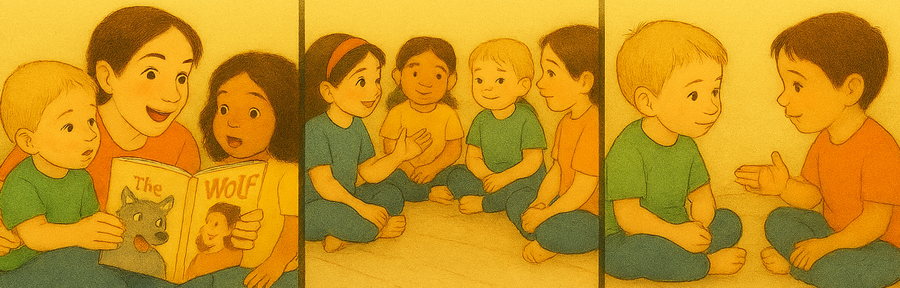
�� During story time, you might see a small group of children sitting together, eyes wide as the adult changes their voice for each character.
�� At circle time, children patiently wait their turn to share their news, learning to value what others say.
�� In play, a child might stop and listen as a friend explains the rules of their game, showing respect and focus.
�� 'Speaking' aims:
Engage in story and shared times
Have confidence and courage to participate and know that all contributions are valid
Join together thoughts and ideas when speaking
Participate and take turns in group and one-to-one discussions
Listen to and talk about stories, songs and events
Be tooled with a varied and useful vocabulary
Make themselves understood
Use the questions how, what, where, when, why, etc. to extend interactions
Communicate socially using key social phrases
 What this looks like for children in our care:
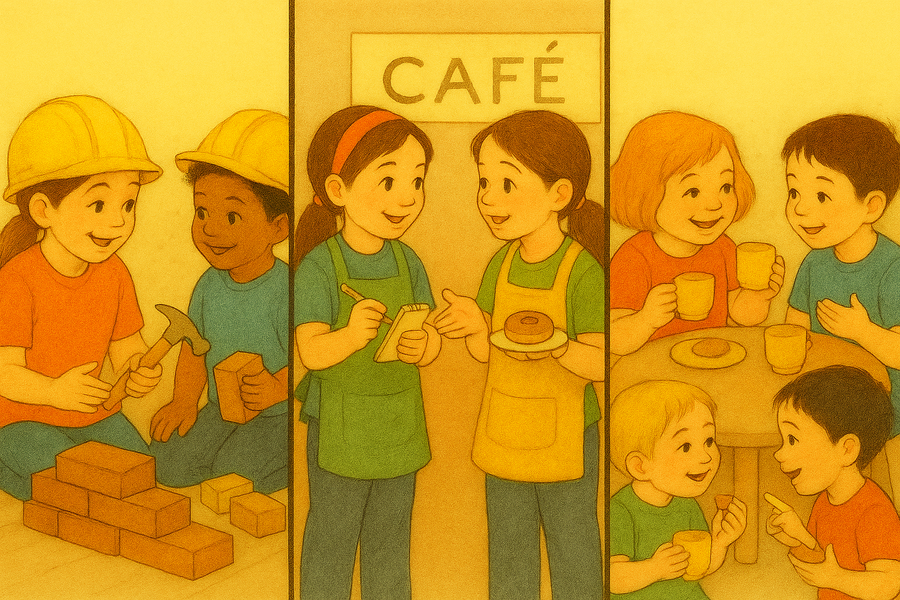
�� Children might be role-playing in a “construction site” or “café,” using their words to plan and negotiate: “You can be the builder and I’ll be the boss!”
�� At snack time, they share thoughts with a staff: “I like apples because they’re crunchy!”
�� Staff gently prompt deeper thinking: “What do you think will happen next?”
�� Children learn to use question words and social phrases like “please,” “thank you,” and “Can I join in?” naturally and confidently.
“Language is the key to learning – every interaction is an opportunity to extend a child’s world.”
– Professor Cathy Nutbrown
�� 'Understanding' aims:
Understand basic concepts and prepositions
Respond appropriately to questions and instructions
Understand and respond to the questions how, what, where, when, why, etc.
Understand a range of sentence structures
Understand the language of others for interactions
What this looks like for children in our care:
�� In the garden, you might hear staff say, “Can you put the ball under the slide?” and the child proudly follows the direction.
�� During a story, children discuss what happened first, what changed and how the characters felt, showing deepening understanding.
�� As they play, they learn new ideas like bigger than, behind, or next to, through hands-on exploration and talk.
“Children’s understanding of language grows through real experiences, playful learning and meaningful conversations.”
– Early Years Alliance
Physical activity is vital for every child’s overall growth and happiness. At our nursery, children are encouraged to explore, stretch, climb, run and create - building the coordination, confidence and strength that support all areas of development.
We provide both indoor and outdoor opportunities for movement and play every day, helping children develop balance, control and awareness of their bodies in space.
“Movement is the key to learning. Through play and activity, children strengthen both body and mind.”
– Early Years Alliance
 �� If you visited our nursery, you might see…
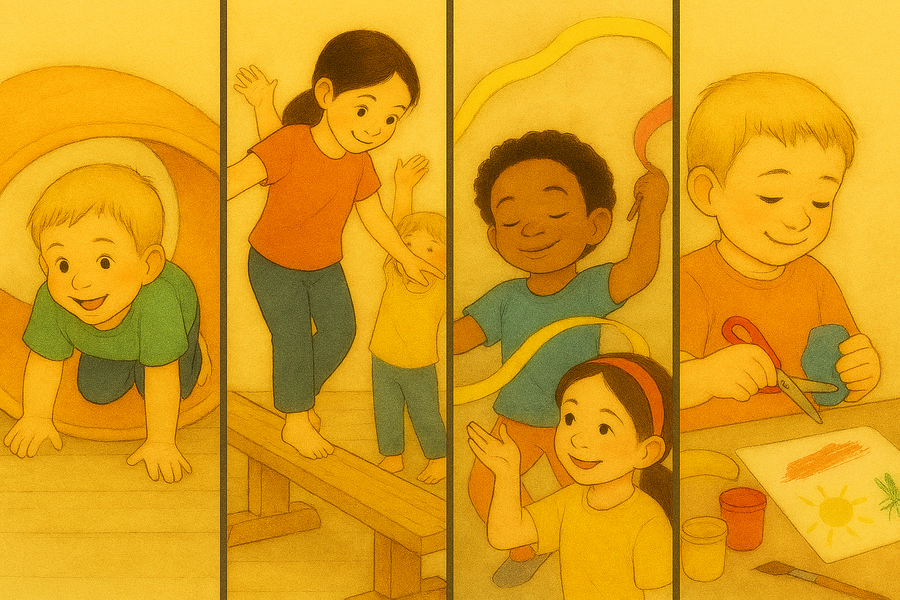
Children crawling through tunnels, balancing along beams or dancing to music with ribbons and scarves. You might see little hands squeezing, cutting, painting and building - growing strength and control through joyful play.
“Children learn best when they are moving and active participants in their learning.”
– Department for Education (EYFS 2021)
'Fine Motor' aims:
To independently form all pre-writing shapes in small scale
Use a range of tools competently, safely and confidently
To have the hand-eye coordination to cut shapes and copy letter shapes with increasing accuracy
To develop a comfortable grip for writing
 What this looks like for children in our care:
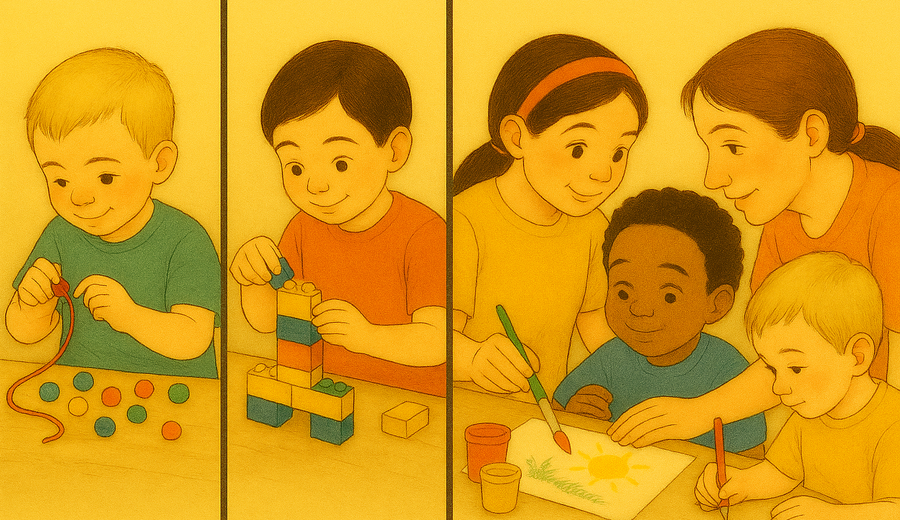
�� You might see children threading beads, building with Lego, painting with brushes, or using tweezers to pick up small objects - all strengthening the muscles needed for writing and drawing. Staff gently model how to hold scissors or pencils correctly, helping children develop precision and confidence.
'Gross Motor' aims:
Enjoy using their body freely
Be aware of the space themselves and others are using
Develop good coordination to aid agility and control
Have good core strength
Have appropriate levels of strength in their body
Have good stability and balance
Enjoy physical activity
Understand directions to use gross motor skills
Talk about the physical changes they feel
 What this looks like for children in our care:
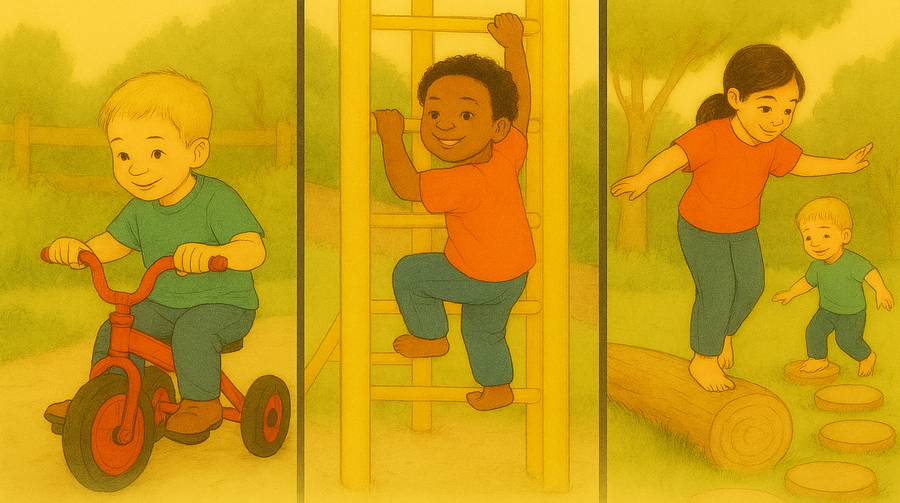
��You might see children pedalling trikes around the playground, climbing safely, or balancing on logs and stepping stones. Staff encourage turn-taking, body awareness and talk about what they notice - “My heart’s beating fast because I’ve been running!”
At our nursery, we spark a love of stories, songs and rhymes from the very start. We build children’s confidence as talkers, listeners, readers and writers through play and meaningful, joyful experiences.
“Reading for pleasure is the single most important indicator of a child’s future success.” – OECD
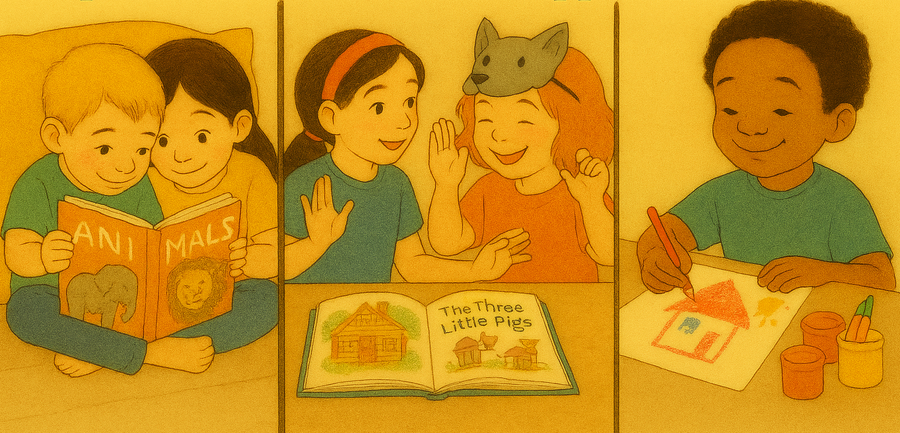 �� If you visited our nursery, you might see…
Children snuggled up sharing a book, acting out a favourite story, or drawing pictures to retell what happened. Staff model a love of reading - laughing, predicting and wondering aloud - so children learn that books hold adventure and meaning.
‘Word Reading’ aims:
Be interested and motivated to read
Have strong Phase 1 skills embedded (Aspects 1–7)
Be able to blend known phonic sounds
Enjoy reading
What this looks like for children in our care:
�� Children play rhyming games, listen for sounds in words and join in with familiar refrains. You might hear laughter as children hunt for environmental sounds in the garden or have early letter recognition when looking for their own names on their pegs.
‘Comprehension’ aims:
Know the importance of real-life reasons for reading
Show preferences for books and give reasons
Have good listening and attention skills
Respond appropriately to questions and instructions
Read to seek and retain facts
Understand and respond to the questions how, what, where, when, why, etc. about what they have heard or read
Sequence, order and retell texts
Make simple predictions and inferences
Ask questions about what they read
What this looks like for children in our care:
�� You might see children retelling The Three Little Pigs using puppets, sequencing pictures, or making predictions - “I think the wolf will blow the house down!”
‘Writing’ aims:
Know the importance of real-life reasons for writing
Begin to write their own name
Verbalise what they wish to write
Know they have a story to tell that is valued
Create writing to be read and enjoyed by others
Use new vocabulary and known story language in oral compositions
Enjoy writing
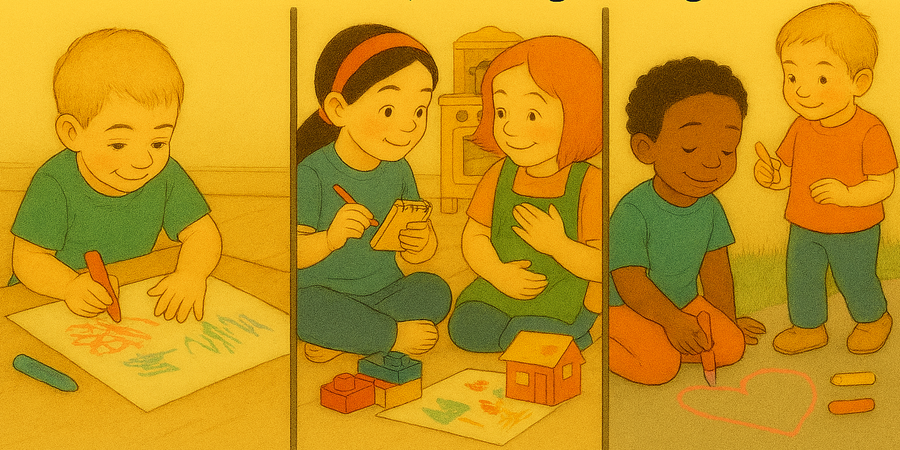 What this looks like for children in our care:
✏️ Children might make shopping lists in the home corner, write birthday cards for friends, or label their artwork proudly. Staff celebrate every early mark as meaningful communication.
Our nursery provides a playful, practical approach to maths. Children count, sort, measure and explore shapes through hands-on, joyful learning. We nurture curiosity and confidence, showing that mistakes help us learn and that maths is fun!
“Mathematics is everywhere - in stories, songs, cooking and play.”
– National Centre for Excellence in Teaching Mathematics (NCETM)
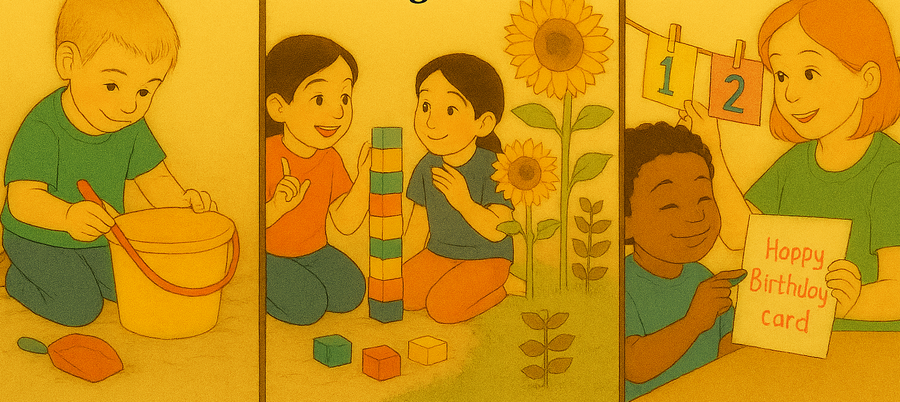 �� If you visited our nursery, you might see…
Children counting how many scoops of sand fill a bucket, comparing heights of towers, or spotting patterns in nature. Staff encourage language like bigger, heavier, more than and less than.
‘Mathematics’ aims:
Know real-life reasons for using mathematics
Compare and use numbers in different contexts
Know the counting principles
Be curious and motivated to problem-solve
Understand mathematical language
Have mastery of numbers to 10
Recognise and continue patterns
Know that mistakes are ok
Have confidence to ask and answer questions
Use the language to explain reasoning
What this looks like for children in our care:
�� You might see children sorting shells by size, making patterns with beads, or counting fruit at snack time. Staff use gentle questioning - “What happens if we add one more?” - to build understanding through play.

Children learn best through real experiences that help them make sense of the people, places and environments around them.
We foster curiosity and connection with the wider world through stories, visitors, outdoor exploration and celebrations of different cultures.
“Children are natural explorers. When they investigate their world, they build curiosity, vocabulary and respect.”
– UNICEF Early Childhood Development
 �� If you visited our nursery, you might see…
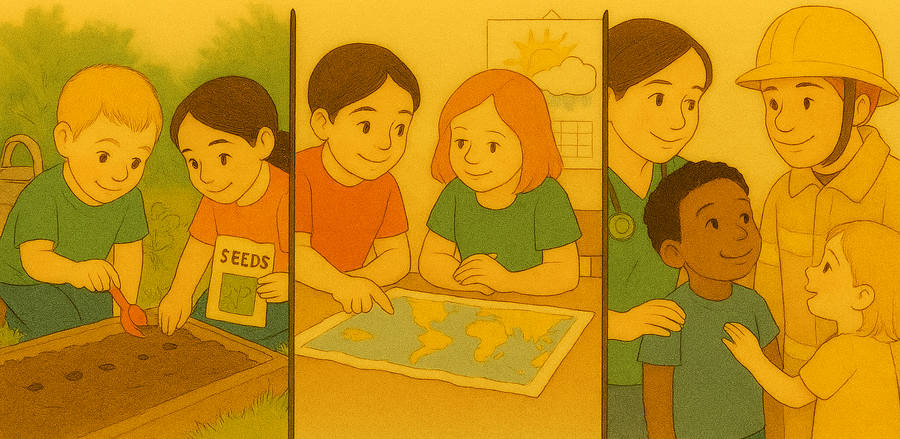
Children planting seeds, talking about the weather, exploring maps, or learning about community helpers like nurses and firefighters. You might hear discussions about who lives in their home or how we can care for the planet.
‘People, Culture & Communities’ aims:
Respect similarities and differences of all faiths
Have a sense of belonging to their own community
Know features of their locality
Know there are people in other places who live differently
Understand and respect British values
Care for the local and wider environment
 What this looks like for children in our care:
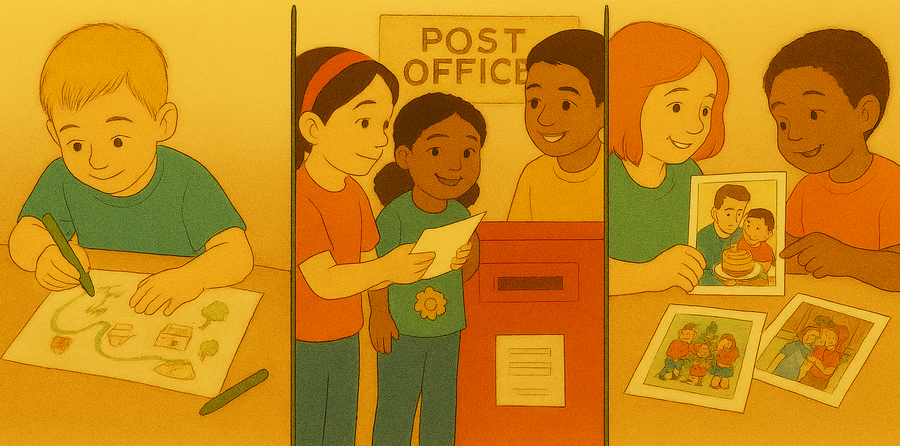
�� Children might draw maps of their journey to nursery, visit the post office, or talk about special family traditions. Staff help them appreciate diversity and community pride.
‘Past & Present’ aims:
Understand and use terms for measures of time
Use and understand the correct tenses
Have aspirations and plans for the future
Know that life existed before living memory and will continue beyond
Know key events in their own timeline
 What this looks like for children in our care:
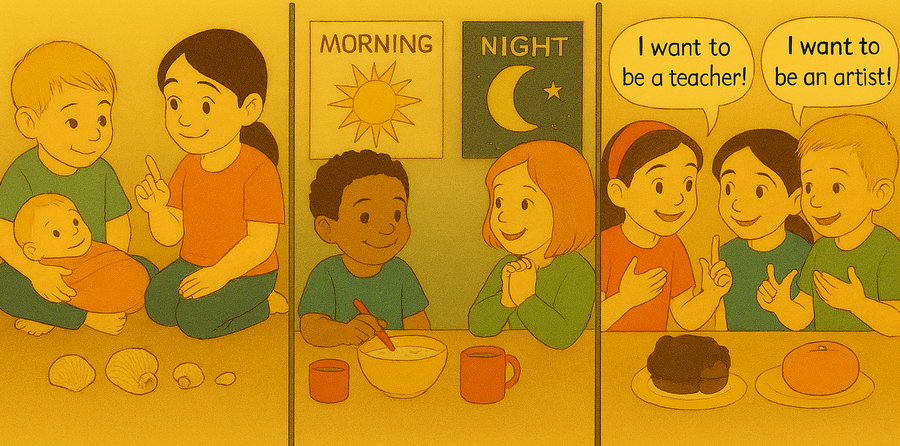
��️ You might hear children talking about what they did “yesterday,” or comparing “when I was a baby” to “when I’m big.” They learn about time and change through stories and their own life experiences.
‘Natural World’ aims:
Explore and talk about nature
Understand growth, decay and change
Know life cycles
Observe the effects of weather and seasons
Notice similarities and differences between animals and habitats
Use all senses to explore materials and changes
 What this looks like for children in our care:
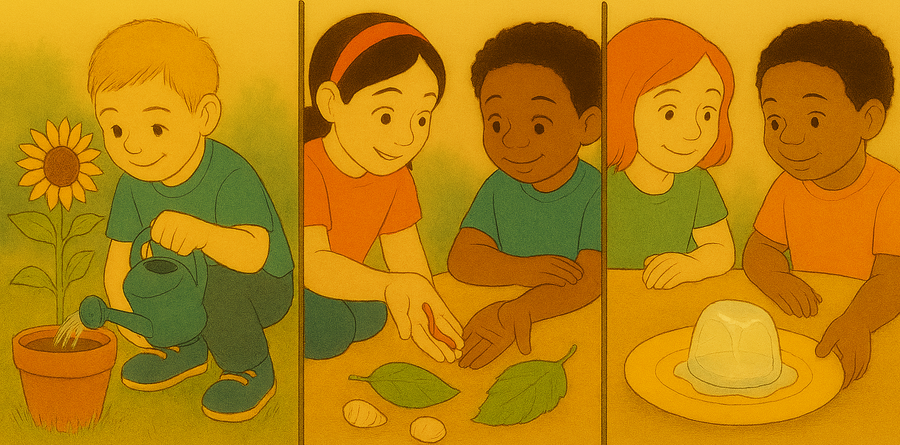
�� Children might be watering plants, looking closely at worms and leaves, or watching ice melt in the sun. Staff encourage questions - “What do you notice? Why do you think that happened?”
At our nursery, creativity flows through everything we do. We give children time, space and materials to explore, express and imagine - through music, movement, art and performance. We value process over product - it’s the joy of discovery and expression that matters most.
“Creativity is intelligence having fun.” – Albert Einstein
�� If you visited our nursery, you might see…
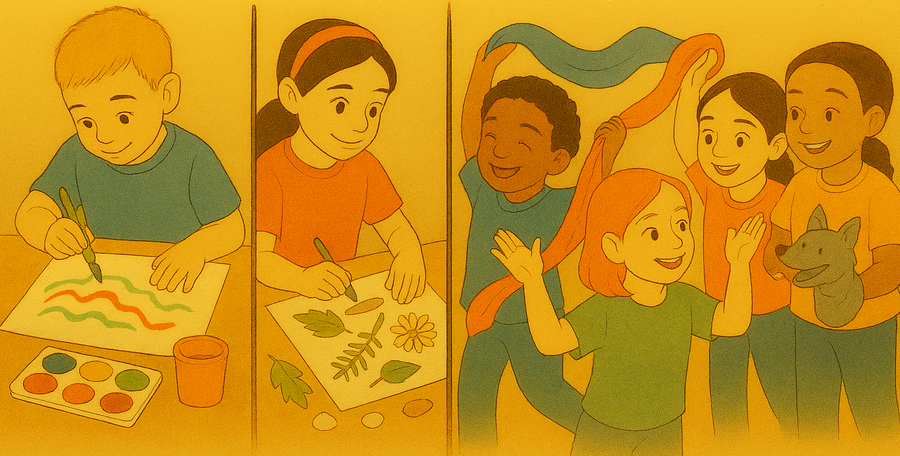 Children painting to music, creating collages from nature, dancing with scarves, or performing a story they’ve made up together. Staff join in playfully, modelling new techniques and celebrating each child’s unique ideas.
‘Being Imaginative & Expressive’ and ‘Creating with Materials’ aims:
Have the freedom to create
Explore a variety of sensory experiences, media, design, colours and textures
Be competent in the use of a range of tools and techniques
Resource independently
Transfer skills across projects
Link media for joining and fastening
Develop a preferred creative outlet
 What this looks like for children in our care:
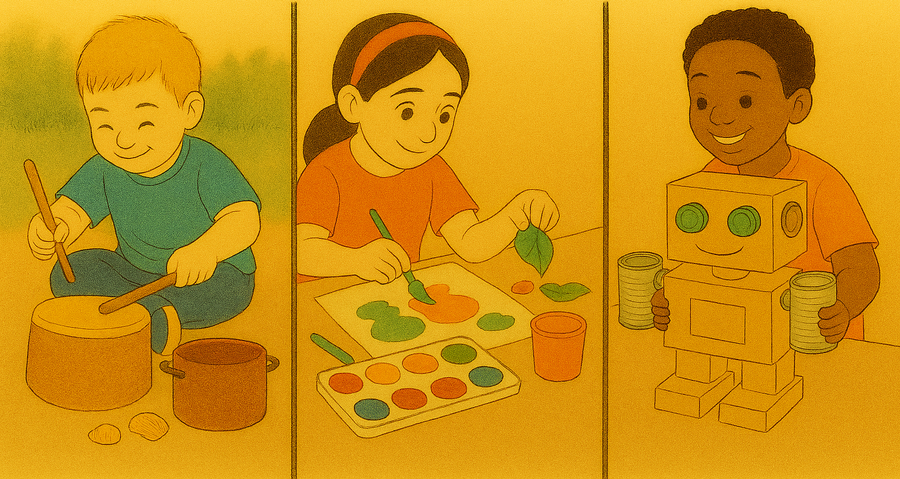
�� You might see a child drumming on pots, mixing paint colours, or designing a robot from recycled materials. Staff praise creativity and curiosity - “You found a new way to make it stand up!”
“Through art and play, children make sense of their world and express who they are.”
– Early Education UK